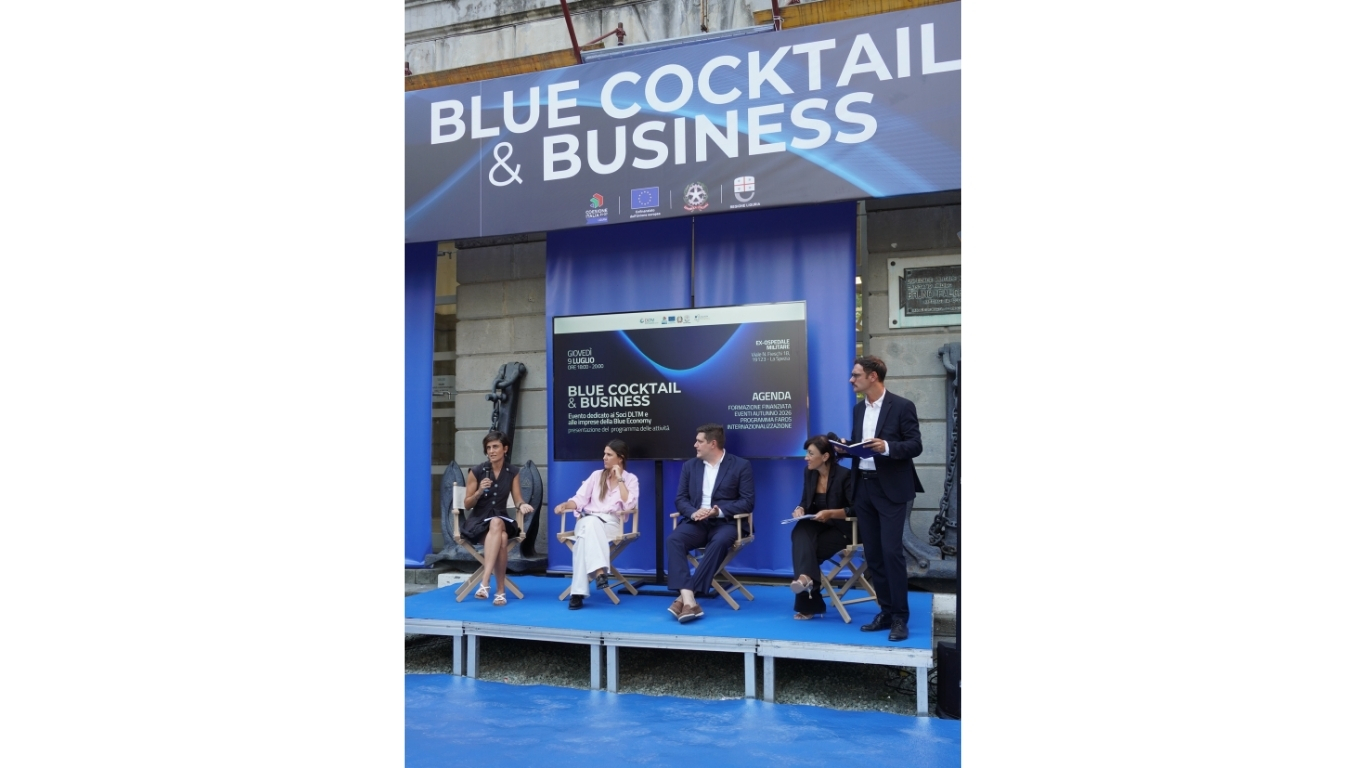
La Spezia, 10 July 2026 – Let’s raise a glass to the Blue Economy!
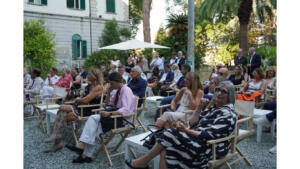
An event that provided an opportunity for discussion, exchange and new possibilities: the “Blue cocktail & business” event, organised by the Ligurian Marine Technology District in collaboration with the Dltm Centre, took place in the Falcomatà garden.
Members, stakeholders, partners and institutional representatives gathered at this evocative and unusual venue to take part in the event, which was divided into two sections and designed to give a boost to the maritime economy by focusing on two key drivers in particular: the ability to network and innovation.
Following an introduction by the journalist Alberto Quarati, who chaired the session, the new scientific director of the Dltm, Filippo De Stefani, broke the ice.
“The Dltm is a hub, the centre where the key players in the evolution of the Blue Economy can come together to devise solutions capable of meeting the world’s challenges. Thanks to technology, we will find solutions to many challenges relating to the marine environment: a treasure that is only partly understood, which we can utilise in various fields and which must be protected,” he said.
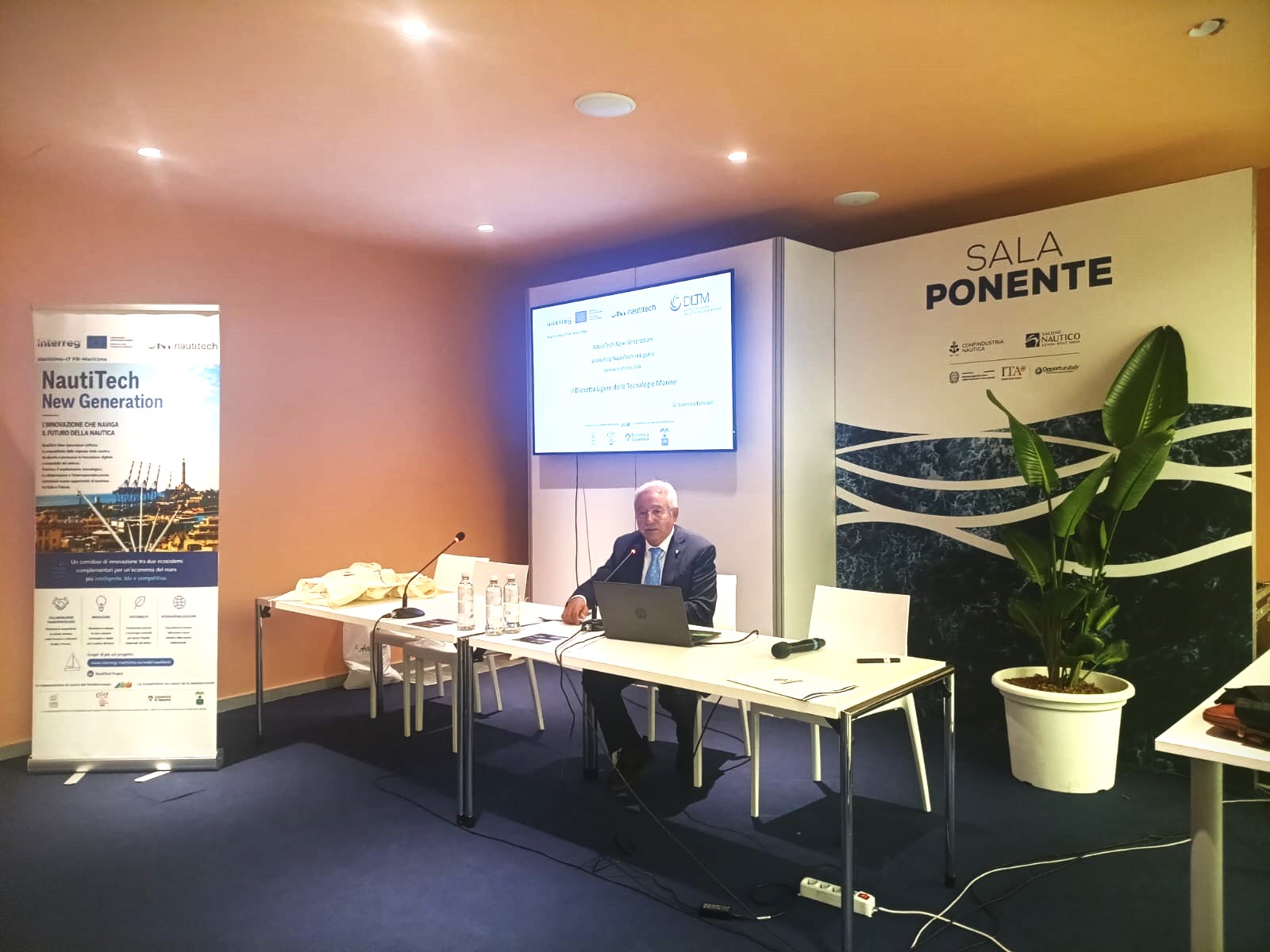
In keeping with the aim behind the launch of “Blue cocktail&business” – to outline the Dltm’s activities for the coming months – project manager Federica Colombo presented the Dltm’s technological roadmap; during the autumn, standing working groups will be set up to define the priorities for updating the “S3”, the smart specialisation strategy – an approach championed by the EU to maximise the use of public funds for research, innovation and development.
At the end of his presentation, the participants used an interactive platform to share what they considered to be the most pressing issues and key requirements for moving forward along this path: from training to AI, a wide range of ideas were put forward.
Davide Ritarossi, also a project manager for the district, announced an important development concerning internationalisation initiatives: from 7 to 10 September, a delegation comprising around thirty representatives from industry, research, academia and institutions affiliated with Naval Québec will be accompanied by the Dltm on a tour of the Ligurian, Genoese and La Spezia regions. “Internationalisation,” he emphasised, “does not simply mean seeking new markets for one’s products and services beyond national borders, but understanding them and building networks and partnerships. It is essential to realise that this is not an opportunity reserved for large companies, but one that opens doors for SMEs and their capacity for innovation.” Ritarossi also announced the organisation’s participation in upcoming trade fairs, with Dltm stands shared with its members.
“There can be no innovation without the right skills: for this reason, in addition to our relationships with partner training organisations, the Dltm has entered into agreements with other organisations in this field and, thanks to these partnerships, we are now able to offer bespoke, funded training programmes to our members to help them further develop their staff.” This was explained by Valeria De Rosa from the executive team, who spoke alongside Elisabetta Fegino, co-founder of Axia (a Genoa-based training organisation), and trainer Tiziana Ferrando, who spoke on the subject of AI.
There is also a focus on Wylab’s Coo, a start-up incubator based in Chiavari, with which the Dltm has launched a partnership: one of the first opportunities for collaboration will be the Faros project, a Blue Economy accelerator.
A wide range of opportunities that can bring benefits first and foremost to the members of the Dltm, but also to the regional ecosystem and local businesses – a point also emphasised by Cristiana Pagni, president of the district’s SME consortium, Tecnomar Liguria.
The closing remarks were given by the chairman, Lorenzo Forcieri, who, as well as expressing his hope that the plans announced would be fully realised, thanked the large number of people present and announced the date for the next information event.
“The district’s mission is to bridge the gap between the worlds of academia and research and those of industry and manufacturing, and this is the objective we have been pursuing in recent years, with significant results. We also want to identify a new approach to networking, one that moves beyond formalities but proves equally effective in achieving objectives in the interests of the local and regional community.”