Genoa, October 7, 2026 – Rethink the boating industry by restructuring and strengthening a fragmented supply chain, with a focus on employment, training, research, and innovation; and envision new uses for a new generation of boating by experimenting with new port, tourism, and technical services, innovative solutions, and promoting the digitization of the sector.
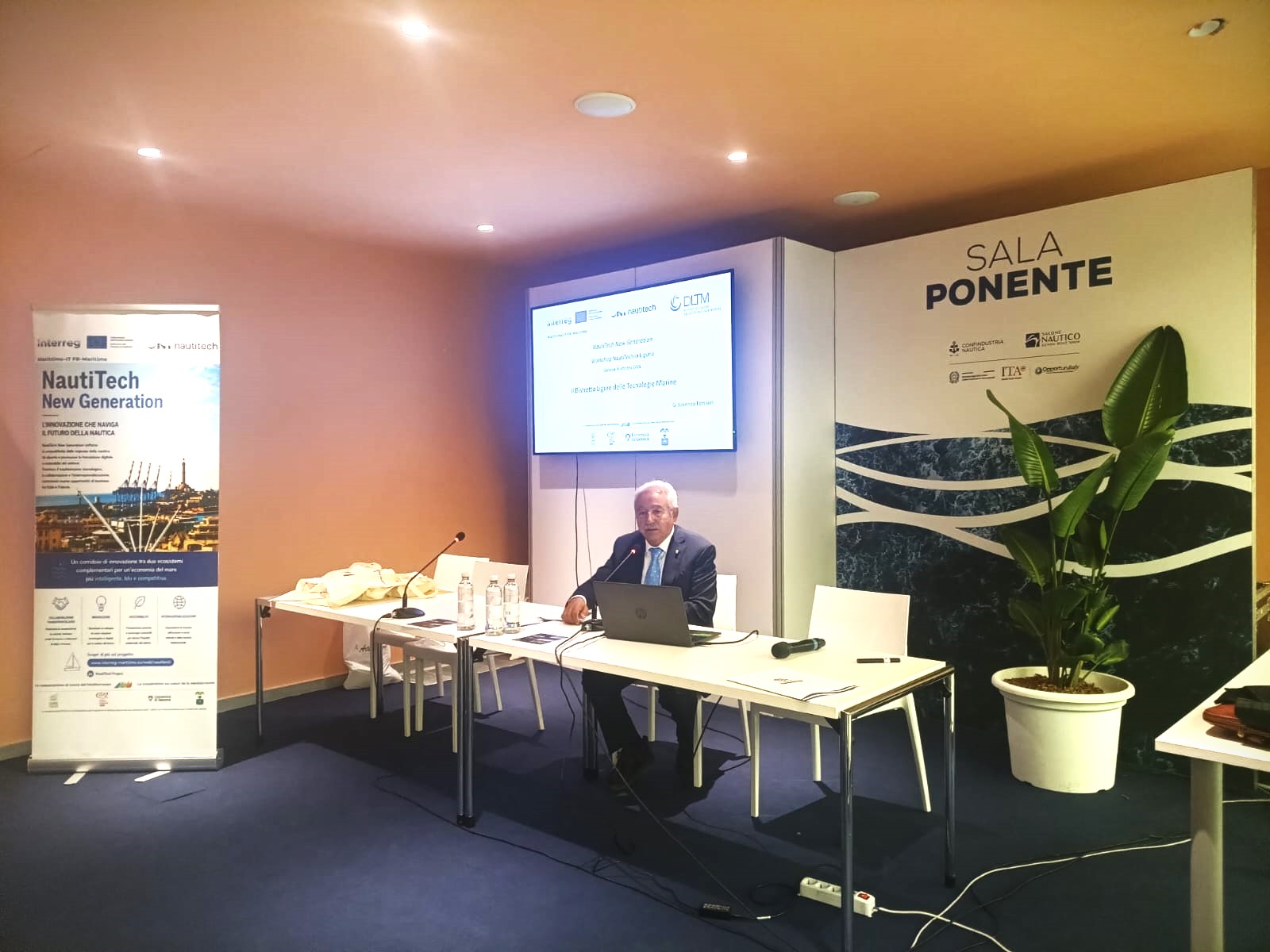
These are the cornerstones of the European Interreg Maritime Italy - France project “Nautitech New Generation,” which organized the workshop “Nautitech in Liguria and B2B Among Innovative Companies” as part of the Genoa International Boat Show. The Ligurian Marine Technologies District – Polo Dltm participated with three presentations: one by President Lorenzo Forcieri, who outlined the district’s activities and projects; one by project manager Federica Colombo, titled “Building a Network for Innovation: Research, Businesses, and New Technologies in Recreational Boating”; and one by Francesca Alfonzetti, titled “Be Stream Power – AI and Cross-Border Cooperation: The New Portal for Maritime Economy Expertise Between Innovation and Resilience.”
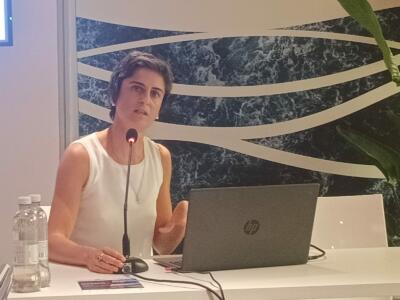
Project Manager, DLTM – Federica Colombo
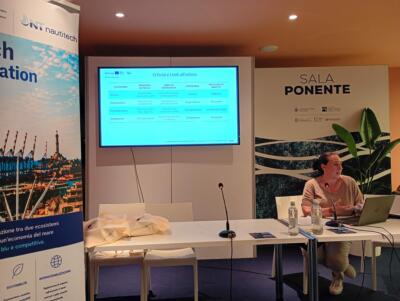
Project Manager, DLTM – Francesca Alfonzetti
This event, which was followed by a B2B session among nautical companies in the Italy-France cooperation area (Corsica, Sardinia, Genoa, Cannes, Mandelieu-la-Napoule, and Théoule-sur-Mer), saw the DLTm take the lead in promoting initiatives aimed at creating a structured supply chain capable of addressing the sector’s challenges, with a focus on establishing a “green” recreational boating laboratory and enhancing human resources. During the proceedings, Professor Zignego of the University of Genoa devoted considerable attention to the issue of disposing of old fiberglass boats. This topic was taken up by Forcieri, who proposed the development of a joint project in this regard, involving major companies in the sector operating in La Spezia—such as Intermarine, Sanlorenzo, Benetti, Baglietto, and the entire cluster of shipyards in our region. The other issue Forcieri emphasized was support for the internationalization of small and medium-sized enterprises.
“We have noticed that there is a need to work on this issue, because small businesses face certain difficulties in addressing it—an issue that is, however, essential for fostering their growth, for moving beyond a market consisting mostly of subcontracting, and for becoming capable of tackling the challenges posed by globalization and competing in international markets as well.”
For this reason as well, the Dltm worked very hard in 2026 to develop a genuine partnership with Canadian companies in Quebec, particularly those affiliated with the Naval Québec cluster.
“We would also like to take this opportunity to call on Ligurian SMEs to let us know if they are willing to continue this relationship and to establish concrete partnerships both in Italy and in Canada, making the most of the opportunities that the size of this Canadian province offers us,” emphasized President Forcieri.
The presentations by Colombo and Alfonzetti were particularly useful in the context of establishing the Franco-Italian cluster, as they highlighted projects already underway or in the process of being launched that can be easily integrated into Nautitech’s initiatives; Colombo focused on: Argonautic, a system designed to support the management of critical phases of navigation (Caim, Unige, Bk, Ees); Gerrismart Mobility, a new generation of electric foiling vessels featuring a reduced wake, greater efficiency, and less oscillation in rough seas (Verme Projects, Azimut Benetti, GerrisBoats, Vulkan Italia, Detra, Unige, Wolf Dynamics); H2Boat’s Sailing2Zero, zero-emission hydrogen-powered vessels; Oceanhis’ BlueBox, a portable, autonomous, and integrated laboratory; and the following naval engineering thesis projects from the La Spezia Campus: “Market Research in the Nautical Sector: Analysis of the Most Effective Technologies for the Supply Chain’s Transition Toward Sustainability” by Stefano Ghisolfo and “Analysis of the State of the Art of Hydrogen Technologies in the Naval and Nautical Sectors and Mapping of the International Research and Innovation Ecosystem” by Manuel Del Naso.
Alfonzetti, on the other hand, focused on Be Stream Power, an Interreg Maritime Italy-France project in which the DLTm is a partner, which aims to address the labor market transitions in the Blue Economy and explore how artificial intelligence can improve the matching of labor and training supply and demand. She also discussed the Be Stream Power roundtables, which have already been held successfully, addressing highly topical issues: from AI in support of employment and cross-border skills to equal opportunities. Central to her presentation was the use of artificial intelligence to support the maritime economy sector.
On the sidelines of the event, the Nautitech project delegation visited the booths of several members of the district.