
Michelangelo Mortello – Head of Corporate Research, Innovation and Strategic Alliances (RIA) of IIS – Italian Institute of Welding
The Ligurian Marine Technologies District is a consortium that brings together and facilitates dialogue amongst around 100 organisations of various kinds, all dedicated to innovation. Among these is the Italian Institute of Welding: we explore its activities, its position within the Italian and regional industrial landscape, its contribution to growth and development, and how it supports companies, students, undergraduates and young researchers in an interview with Michelangelo Mortello – Head of Corporate Research, Innovation and Strategic Alliances (RIA) at the IIS – Italian Institute of Welding.
– The Italian Institute of Welding (IIS) is widely recognised as a leading authority in the field of welding. How would you describe the IIS in 2026, and what role does it play in the Italian and Ligurian industrial sectors?
"The industry is changing rapidly: new technologies and new materials are transforming the way components are designed, manufactured and tested. In this context, an organisation with strong technical expertise gained in the field across various sectors, capable of integrating diverse skills, plays a fundamental role. As a non-profit organisation and an independent technical body, our role is to bring these areas of expertise together, for the benefit of both research and industry, whilst maintaining impartiality. IIS, drawing on its deep-rooted connections with all levels of production, has also established itself as a recognised integrator of expertise within individual supply chains, from lower-tier suppliers right up to OEMs and the top echelons of each supply chain."
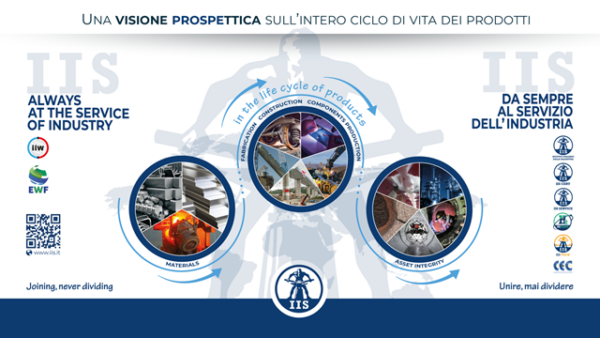
IIS – Italian Institute of Welding: bringing together advanced expertise to serve industry
– In recent years, the IIS has significantly expanded its scope of activity. What are the main areas of technology in which you are currently investing?

Technical excellence and continuous innovation: IIS’s technical services are constantly evolving, combining expertise and solutions
"Alongside our long-standing expertise in materials and joining technologies, our new strategic priorities focus primarily on digitalisation, sustainability, artificial intelligence, smart monitoring, innovative materials and technology transfer – always with the aim of supporting the competitiveness of the manufacturing sector across a wide range of industries, including energy, nuclear, space, defence and advanced manufacturing. The aim is to support the industry’s technological evolution with concrete, technically validated and multidisciplinary solutions."
– Many people talk about innovation. How does a research project actually come about within an organisation such as IIS, and how does it translate into a real benefit for businesses?
"For us, innovation always stems from a practical need. We work alongside companies, universities, research centres and institutions to transform an industrial need into a collaborative applied research project. The real value lies in the results achieved in the laboratories being turned into new processes, new technologies, new skills or services that businesses can actually put to use."

Stefano Pinca explains the classification of 3D printing processes
– Many young people see industrial research as a little-known field. What opportunities can an organisation such as IIS offer today to students, final-year undergraduates and early-career researchers?
“IIS offers opportunities for work placements, dissertations, PhDs, research fellowships and collaborations with Italian and international universities, enabling young people, supported by experienced staff, to work on real-world projects with businesses right from the start. We have offices and laboratories in various Italian regions and invite students and graduates to discover the opportunities available on our website” www.iis.it, where initiatives aimed at young people are also published."
– Technical training has always been one of the cornerstones of the IIS. How is the way we train engineers, technicians and professionals changing today?
"Training at IIS is standardised and accredited, in line with the relevant national and international standards. The qualification programmes for technical staff are constantly being updated. It is worth noting that microelectronics is one of our areas of excellence: we are one of the leading European schools recognised by the European Space Agency (ESA) for qualification and certification in accordance with ESA/ECSS standards, which are essential for space applications and high-reliability systems. Today, training is becoming increasingly digital, interactive and personalised. Alongside traditional teaching methods, we have implemented the use of simulators, online platforms, virtual reality and artificial intelligence tools that enable more effective learning, whilst always maintaining a strong link with the needs of industry."
– The IIS is involved in numerous international forums. How important is it to contribute to the development of European technological standards and strategies?
"Through organisations such as the International Institute of Welding (IIW) and the European Welding Federation (EWF) – of which IIS is a founding member – and through our participation in numerous European projects, we bring Italian expertise to key international forums and contribute to the development of standards, qualifications and new technologies. Since 2020, IIS has hosted the Secretariat of the International Institute of Welding (IIW). This enables it to be recognised as the world capital of welding."
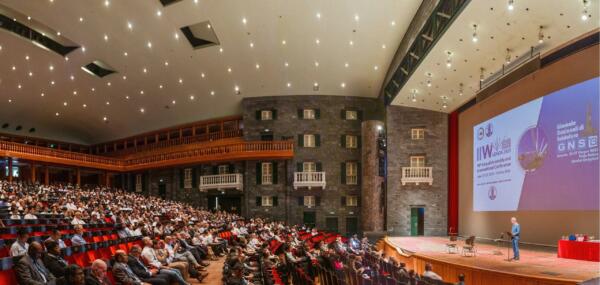
Opening of the 78th Annual Assembly and International Conference of the IIW at the Teatro Carlo Felice, organised by the IIS in Genoa
– What contribution does it make to the innovation ecosystem today, and how does it collaborate with businesses, universities, research centres and institutions to promote the competitiveness of the industrial system?
“The IIS operates throughout the country via a network of regional offices, accredited welding schools, training centres and qualified partners, providing businesses and professionals with highly specialised services, training and expertise across Italy. We are strong believers in working as a network. We collaborate with universities, research centres, large companies, SMEs, technology clusters and institutions because innovation arises from the coming together of different areas of expertise. Our role is to forge connections, facilitate technology transfer and transform research into tangible opportunities for the local area and for businesses.”

63rd Meeting of the European Defence Agency’s CapTech Materials
– What is the Italian Institute of Welding’s vision for the coming years, and what contribution does it aim to make to national technological competitiveness?
"Our vision is to continue to be a national and international benchmark for industrial innovation, helping businesses navigate the major digital, energy and technological transitions. We want to help make the Italian industrial system increasingly competitive, sustainable and capable of making the most of its expertise. Certainly artificial intelligence, advanced robotics, digital twins, innovative materials and immersive technologies. These are technologies set to make industry more efficient, sustainable, safe and capable of making decisions that are increasingly data-driven. At the heart of this vision, however, are first and foremost the people at IIS, who are our greatest asset: expertise, professionalism, passion and the ability to work together represent our true competitive advantage and the driving force behind every innovation."

The IIS Research and Innovation Coordination Team
– What added value does your membership of the DLTM bring to your work, particularly as you also took part in the 2025 Seafuture trade fair alongside them at a shared stand, whose slogan was ‘Together for the future’?
“The DLTM is a concrete example of an innovation ecosystem. Being a member means engaging on a daily basis with businesses, universities, research centres and institutions, forging new partnerships and developing joint projects. The slogan “Together for the future” this sums up the approach well: today’s technological challenges are tackled by building networks of expertise and harnessing the region’s areas of excellence.”

The Dltm – Polo Dltm stand at Seafuture, shared with IIS and other partners